
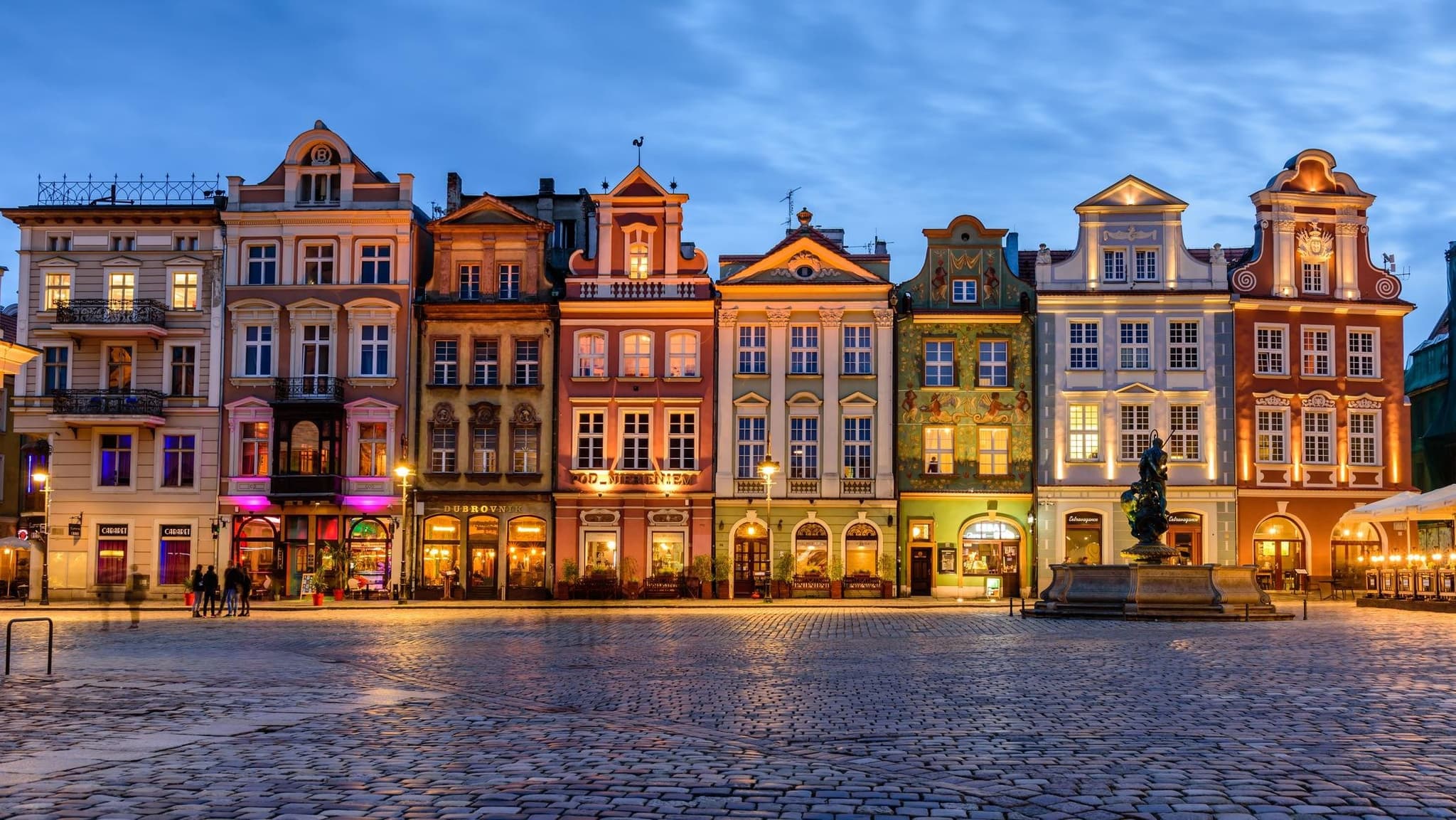
Poznań, the capital of the Greater Poland (Wielkopolska) region, is a city defined by its strong commercial heritage and strategic location between Berlin and Warsaw. With a population of over 540,000, it is renowned for its international trade fairs, vibrant start-up scene, and high quality of life. For foreigners, Poznań offers a more compact and affordable alternative to Warsaw, while retaining a robust labor market and excellent infrastructure.
City Overview and Districts
Poznań is characterized by a distinct blend of historic architecture and modern business infrastructure. The city is administratively divided into 42 units, but residents typically identify with five larger historical districts. Each offers a different atmosphere and price point.
Key Neighborhoods for Expats
- Stare Miasto (Old Town): The tourist center. It offers beautiful architecture and nightlife but can be noisy and expensive. Ideal for short-term stays or those who want to be in the center of action.
- Jeżyce: Located west of the center. Known as the "hipster" district, it is famous for its Art Nouveau tenement houses, vegan restaurants, and artistic vibe. It is highly popular among students and young expats.
- Wilda: A post-industrial district undergoing rapid gentrification. It offers lower rents than Jeżyce while retaining a distinct character and proximity to the center.
- Grunwald: A greener, residential area with many villas and embassies. It is popular with families and professionals looking for quiet surroundings.
- Rataje & Piątkowo: Large residential districts dominated by block-style housing. They offer the most affordable rental options and are well-connected by the "Pestka" (PST) fast tram line.
Housing Market and Rental Costs (2026)
Rental prices in Poznań are generally lower than in Warsaw, Kraków, or Wrocław. The market is stable, though competition can be high at the start of the academic year (September/October). Prices typically exclude administrative rent (czynsz administracyjny) and utilities, which add an extra 600–900 PLN ($150–$225 USD) to the monthly bill.
| Apartment Type | Average Monthly Rent (PLN) | Approx. USD (Jan 2026) |
|---|---|---|
| Studio (Kawalerka) | 2,000 – 2,400 PLN | ~$500 – $600 USD |
| 1-Bedroom (2 rooms) | 2,600 – 3,200 PLN | ~$650 – $800 USD |
| 2-Bedroom (3 rooms) | 3,500 – 4,500 PLN | ~$875 – $1,125 USD |
Currency conversion estimate: 1 USD ≈ 4.00 PLN.
Public Transport (ZTM Poznań)
Poznań boasts one of the most efficient public transport systems in Poland, managed by ZTM. It relies on a network of trams (including the fast PST line) and buses. The system is unique due to its electronic payment card, PEKA.
The PEKA Card and tPurse (tPortmonetka)
The PEKA card is the primary way to pay for travel. It functions as an electronic wallet (tPurse). Unlike other cities where you buy time-limited tickets (e.g., 20 mins), the PEKA system allows you to pay per stop. This is often cheaper for short journeys.
- Check-in / Check-out: You must place your card on the reader when entering and leaving the vehicle to be charged the exact amount for the number of stops traveled.
- Paper Tickets: Traditional time-based paper tickets are still available for tourists but are more expensive than the PEKA tariff.
Tariff Zones and Prices
The system is divided into Zone A (City of Poznań) and Zones B, C, D (Suburbs). Most residents only need Zone A.
- 15-minute ticket (Paper/App): 4.00 PLN (~$1.00 USD).
- 45-minute ticket (Paper/App): 6.00 PLN (~$1.50 USD).
- 90-minute ticket (Paper/App): 8.00 PLN (~$2.00 USD).
- 30-Day Network Ticket (Zone A): Approx. 119 PLN (~$30 USD) – requires a personalized PEKA card.
Labor Market and Economy
Poznań has one of the lowest unemployment rates in Poland, often dropping below 1.5%. The city is a major logistics and trade hub, hosting the Poznań International Fair (MTP).
- Key Industries: Logistics (Amazon, DHL hubs nearby), Manufacturing (Volkswagen), IT/Tech, and Business Services (BPO).
- Salaries: The average gross monthly salary in the enterprise sector in the region is approximately 8,600 PLN (~$2,150 USD). While slightly lower than Warsaw, the purchasing power is often comparable due to lower living costs.
Administrative Locations for Foreigners
Residence permits (Karta Pobytu) and work authorizations are processed by the Wielkopolska Provincial Office (Wielkopolski Urząd Wojewódzki).
Department for Foreigners
- Address: Plac Wolności 17, 61-739 Poznań.
- Booking System: Visits must be booked online via the office's website. The system is known for high demand; slots for residence permit submissions are often released at specific times (e.g., usually in the morning).
- Processing: While generally considered more efficient than the Lower Silesian office (Wrocław), wait times for decisions can still exceed 4–6 months depending on the case complexity.
Environment and Regulations
Unlike Kraków and Warsaw, Poznań has not yet implemented a strict Clean Transport Zone (SCT) banning older cars as of early 2026. However, discussions are ongoing, and drivers of older diesel vehicles should stay informed about potential future restrictions. The city has an extensive network of bicycle lanes and a popular city bike rental system (PRM).