
Childcare and Schooling in Poland: A Guide for Foreigners (2026)
In Poland, the education system is divided between childcare for the youngest children and a multi-stage school system for older youth. As of 2026, education remains mandatory for all children residing in the country between the ages of 7 and 18. Recent administrative changes have further integrated family financial support with the requirement for children to attend Polish educational institutions. This article provides a factual overview of the types of facilities, enrollment procedures, and the 2026 regulations affecting foreign families.
Early Childhood Care and Preschool (Ages 0–6)
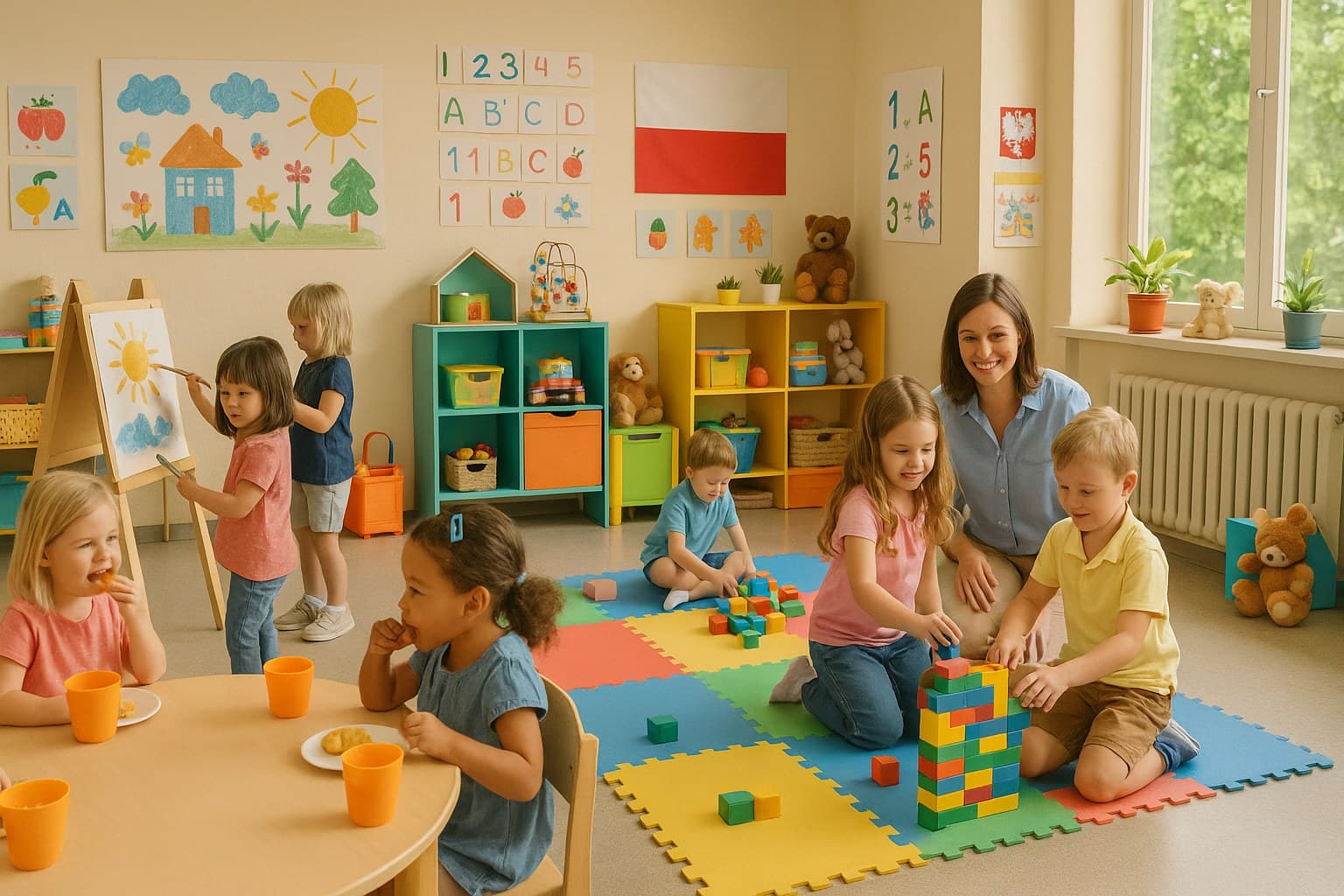
Childcare for children under the age of 7 is categorized into two stages based on the child's age. These facilities are not part of the compulsory school system, with the exception of the final preschool year.
Nurseries and Kids' Clubs (Ages 0–3)
Children aged 20 weeks to 3 years can attend nurseries (żłobki) or kids' clubs (kluby dziecięce). These facilities focus on care and social development rather than a formal curriculum. There are both public and private options. Public nurseries are often subsidized by local municipalities, though availability is limited in major cities. In 2026, fees in public nurseries typically range from 300 to 600 PLN per month for catering, while private fees are significantly higher.
Kindergartens and "Zerówka" (Ages 3–6)
Preschool education (przedszkole) is available for children from the age of 3. While optional for ages 3 to 5, every child has a legal right to a place in a preschool. The final year of preschool, known as "zerówka" (grade 0), is mandatory for all 6-year-olds to prepare them for primary school. This requirement applies to all children living in Poland, regardless of their parents' nationality or residence status.
The Formal School System (Ages 7–18)
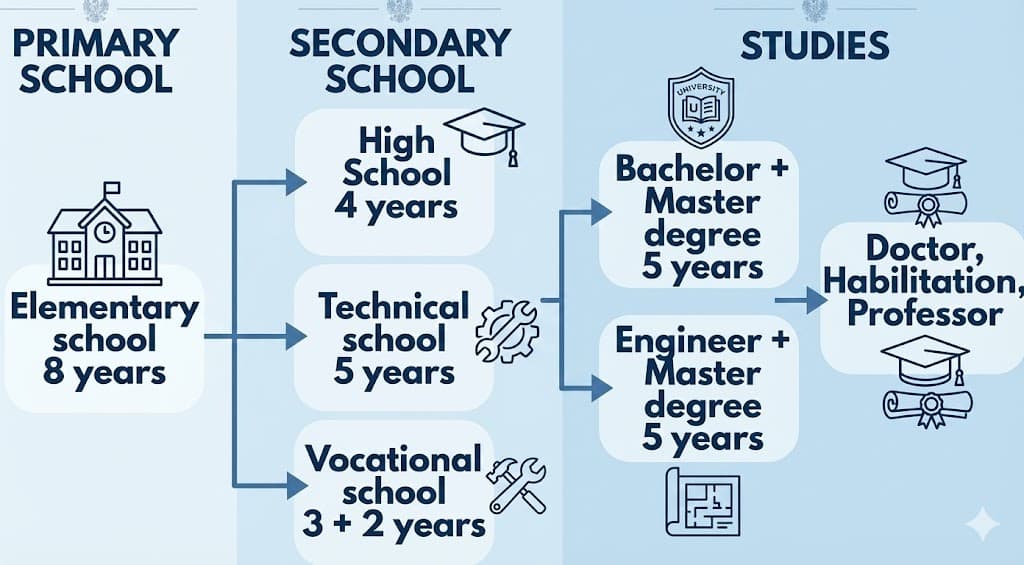
Compulsory schooling begins in the calendar year the child turns 7. The Polish school year runs from September to late June and is divided into two semesters. Education in public schools is free for all foreign nationals until the age of 18 or the completion of secondary school.
Primary and Secondary Education Stages
| Stage | Grades / Age | Type of Institution |
|---|---|---|
| Primary School (Szkoła Podstawowa) | Grades 1–8 (Ages 7–15) | Mandatory for all. Ends with a national 8th-grade exam. |
| General Secondary (Liceum) | 4 Years (Ages 15–19) | Prepares for the Matura exam and university entry. |
| Technical Secondary (Technikum) | 5 Years (Ages 15–20) | Combines general education with vocational qualifications. |
| Sectoral Vocational (Szkoła Branżowa) | 3 + 2 Years (Ages 15–20) | Focuses on specific trades and professional skills. |
Enrollment Process for Foreigners
Children are admitted to Polish public schools throughout the school year, provided there are vacancies. A child's lack of proficiency in the Polish language is not a legal ground for refusal of admission. Public schools are required to provide free additional Polish language lessons for foreign students to facilitate their integration.
Required Documentation
To enroll a child, parents must typically provide the following to the school director:
- The child’s passport or identity document.
- Proof of the parents' legal stay and residence registration (meldunek).
- Transcripts or certificates from previous schools (translated into Polish by a sworn translator if requested).
- PESEL number (if assigned).
As of 2026, first-time residence registration for foreigners requires an in-person visit to the municipal office, which is often a prerequisite for obtaining the PESEL number needed for various educational digital platforms.
Financial Support and 2026 Benefit Changes
Foreign families residing in Poland are eligible for state financial assistance programs, provided they meet specific residence and employment criteria. In 2026, new regulations have linked these benefits more closely to the child's integration into the Polish system.
Family 800+ Program
The 800+ benefit is a monthly payment of 800 PLN per child. Effective February 2026, new eligibility checks apply to foreigners. To receive the benefit, at least one parent must be legally employed or economically active, and the child must be enrolled in and attending a Polish school or kindergarten. Families whose children study remotely in foreign systems (e.g., online schools from their home country) are generally no longer eligible for this benefit.
Good Start (300+) Program
This is a one-time annual payment of 300 PLN for each child starting the new school year, intended to cover the cost of school supplies. Applications must be submitted electronically via the ZUS (Social Insurance Institution) platform between July and November.
Limitations and Uncertainties
While public education is free, parents are responsible for costs related to school meals, insurance, textbooks (for non-compulsory subjects), and extracurricular activities. In major cities, competition for places in highly-ranked secondary schools (licea) is significant, and admission is based strictly on the results of the 8th-grade national exam and primary school grades.
For children with special educational needs, an official assessment (orzeczenie) from a Polish Psychological and Pedagogical Counseling Center is required to access specialized support or individual teaching plans.