
Emergency and Safety Services in Poland
Poland operates a comprehensive network of emergency and safety services designed to protect residents and visitors. The system is centered on the European emergency number 112, which acts as a central dispatch point, but direct-access numbers for specific services remain functional and widely used. For foreigners, understanding how to navigate these services and the legal requirements for reporting incidents is critical for personal safety and administrative compliance.
Primary Emergency Numbers
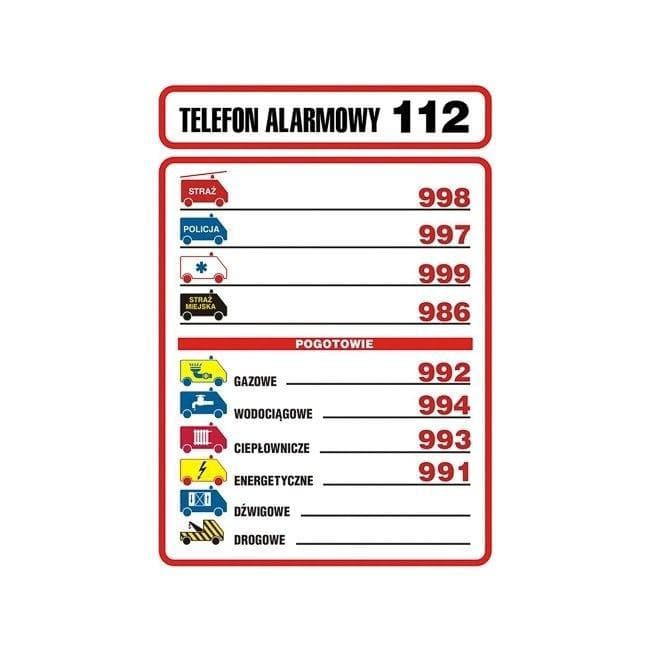
In Poland, emergency assistance can be requested through several dedicated telephone lines. All calls to these numbers are free of charge from any landline or mobile device, including phones without a SIM card or with a locked screen.
| Service | Number | Primary Function |
|---|---|---|
| Universal Emergency Number | 112 | Multilingual dispatch for all emergency types. |
| Ambulance / Medical | 999 | Direct contact for life-threatening health emergencies. |
| Fire Brigade | 998 | Fire, chemical spills, and technical rescue. |
| Police | 997 | Crime reporting, traffic accidents, and security threats. |
The 112 System
The 112 number is the primary contact for foreigners. Operators are trained to handle calls in Polish and English, and in many regional centers, support for German, Russian, or Ukrainian is also available. The dispatcher gathers information and redirects the request to the appropriate local unit (Police, Fire, or Medical).
Specialized Safety and Utility Services
Beyond the primary emergency lines, specialized services handle non-life-threatening local issues or specific environmental hazards. These numbers are typically reachable directly from any phone.
- Municipal Guard (Straż Miejska) – 986: Handles public order issues, illegal parking, and local disturbances. In 2026, they also manage "Animal Patrol" units for stray or injured animals in urban areas.
- Mountain Rescue (GOPR/TOPR) – 985 or 601 100 300: Dedicated services for assistance in the Polish mountains.
- Water Rescue (WOPR) – 601 100 100: Emergency assistance on Polish lakes and coastal waters.
Utility Emergency Services
In the event of infrastructure failure or hazardous leaks, residents should contact the relevant utility emergency line:
- Energy (Electricity): 991
- Gas: 992
- District Heating: 993
- Water and Sewerage: 994
Reporting an Incident: Process and Language
When calling an emergency line, the caller is expected to provide specific information in a structured manner. Even if the caller does not speak Polish, dispatchers are trained to guide the conversation using basic English prompts.
The following information is required during the call:
- Location: Exact address or landmarks.
- Nature of the event: What happened (e.g., accident, fire, robbery).
- Number of victims: And their apparent condition.
- Caller details: Name and contact number.
The caller must not hang up first. The operator will terminate the call once all necessary data has been logged.
Legal Responsibility and Penalties
Misuse of emergency numbers is strictly regulated under the Polish Code of Petty Offenses (Kodeks Wykroczeń). In 2026, Polish authorities have maintained strict enforcement against false alarms and unjustified calls to ensure the availability of lines for genuine emergencies.
Under Article 66 of the Code, an individual who intentionally reports a false alarm or blocks an emergency number without justification is subject to:
- Fines: Up to 1,500 PLN (approx. $416.44 USD as of January 12, 2026).
- Supplementary Payments (Nawiązka): If a false alarm causes an unnecessary deployment of services, the court may order a payment of up to 1,000 PLN (approx. $277.63 USD as of January 12, 2026) to cover operational costs.
- Other Penalties: Potential arrest or restriction of liberty for extreme or repeated offenses.
Limitations and Exceptions
While 112 operators often speak English, staff at direct numbers (like 986 for Municipal Guard) may have limited foreign language proficiency, especially outside major cities. Foreigners are encouraged to use 112 as their first point of contact to ensure a multilingual response.
Additionally, medical services provided in life-threatening emergencies are available regardless of insurance status. However, for non-emergency medical consultations, residents are expected to use their National Health Fund (NFZ) provider or private medical package.