
Polish Culture
Integration into Polish society involves both navigating administrative requirements and adapting to local social norms. A central component of this process is the acquisition of the Polish language, which is often a formal requirement for long-term residency and citizenship. In 2026, Poland has expanded its network of integration centers and moved many administrative procedures to digital platforms, emphasizing the role of language proficiency in the successful transition to life in the country.
Polish Language Proficiency: Levels and Certification
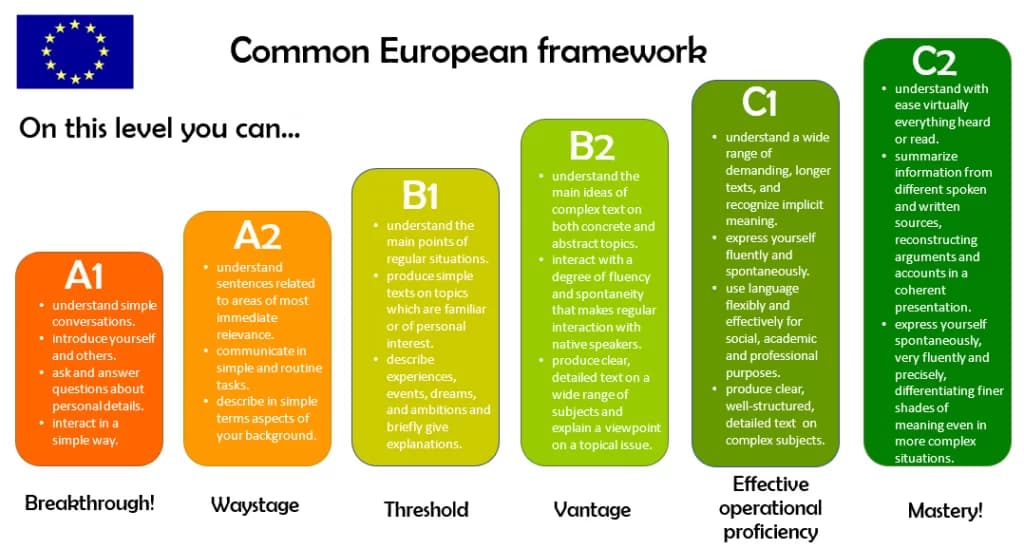
The Polish language is categorized according to the Common European Framework of Reference for Languages (CEFR), ranging from A1 (beginner) to C2 (proficient). While English is widely spoken in major business hubs and by younger generations, Polish remains the primary language for administrative, legal, and many professional interactions.
State Certificate Examinations
Foreigners wishing to document their language skills for formal purposes—such as applying for a long-term EU resident permit or Polish citizenship—must typically pass the State Certificate Examination in Polish as a Foreign Language at a level of at least B1. These exams are organized several times a year by the State Commission for the Certification of Proficiency in Polish as a Foreign Language.
| Requirement Type | Level Required | Purpose |
|---|---|---|
| Long-term EU Residency | B1 (Adults) | Mandatory legal requirement for non-EU citizens. |
| Polish Citizenship | B1 (Adults) | Evidence of integration and language mastery. |
| University Studies | B2 / C1 | Usually required for programs taught in Polish. |
| Professional License | B2 / C1 | Depends on the individual situation (e.g., medical, legal). |
As of January 12, 2026, the standard examination fee for the B1 and B2 levels for adults is 150 EUR (approx. $164.84 USD based on the exchange rate of 1 EUR = 1.099 USD). An additional fee of 20 EUR (approx. $21.98 USD) is charged for the issuance of the physical certificate upon passing.
Language Learning Resources
Various options are available for learning Polish, ranging from intensive academic courses to volunteer-led social programs. In 2026, there is an increased focus on digital learning and hybrid models.
University and Commercial Courses
Major universities, such as the University of Warsaw (Polonicum) or Jagiellonian University, offer semester-long or year-long preparatory courses. Commercial language schools in cities like Warsaw, Kraków, and Wrocław provide flexible evening or weekend classes. A typical 12-month intensive course (approx. 480 hours) in a private institute can cost around 1,850 EUR (approx. $2,033.15 USD as of January 12, 2026).
Free and NGO-led Programs
Several non-governmental organizations (NGOs) and municipal centers offer free language support for migrants and refugees. These programs are often high in demand and require early registration.
- Ocalenie Foundation (Warsaw): Offers free stationary courses for adults at beginner levels. Enrollment for the 2026 spring semester concluded in late 2025, with results announced on January 26, 2026.
- Wrocław Integration Centre: Implements the "Wrocław on Tongues of the World" program, pairing foreigners with local volunteers for free one-on-one language practice.
- NAWA Summer Courses: The Polish National Agency for Academic Exchange organizes intensive, free summer courses for foreign students. Registration for the 2026 session typically opens in January and February 2026.

Integration Infrastructure and Support
Integration in Poland is increasingly decentralized, with local governments and specialized centers providing direct assistance to newcomers. In early 2026, the Polish government officially launched a nationwide network of Migrant Integration Centers (Centra Integracji Cudzoziemców).
Migrant Integration Centers (CIC)
These centers act as "one-stop-shop" hubs where foreigners can receive information on administrative procedures, legal stay, and social services. Many CICs also host workshops on Polish culture, labor market orientation, and basic Polish language "survival" courses. As of January 2026, access to these services is generally free for legally residing foreigners.
Cultural Integration and Social Norms
Integration also involves understanding local customs. Notable public holidays that significantly affect daily life (closing shops and offices) include:
- Majówka: May 1st (Labor Day) and May 3rd (Constitution Day), often spent in outdoor gatherings.
- Religious Holidays: Easter and Christmas are central cultural events where businesses close and public services are limited.
- National Independence Day: November 11th, marked by official parades and public events.
Practical Handling: Administrative Digitization (2026)
A significant shift in 2026 is the mandatory use of the MOS (Case Management Module) e-portal for residency applications. Foreigners must now use a Trusted Profile (Profil Zaufany) or a qualified electronic signature to file their dossiers. This digital integration is intended to streamline the legalization of stay, which is a prerequisite for long-term integration. The standard residence permit application fee in 2026 is 400 PLN (approx. $111.02 USD as of January 12, 2026).
Limitations and Uncertainties
While integration support has increased, challenges remain regarding the availability of free language courses in smaller towns. Furthermore, while the MOS e-portal aims to reduce backlogs, initial stability issues may affect processing times during early 2026. Foreigners should also note that the automatic 800+ child benefit is now strictly linked to the child's attendance in a Polish school, emphasizing the state's focus on school-based integration for families.